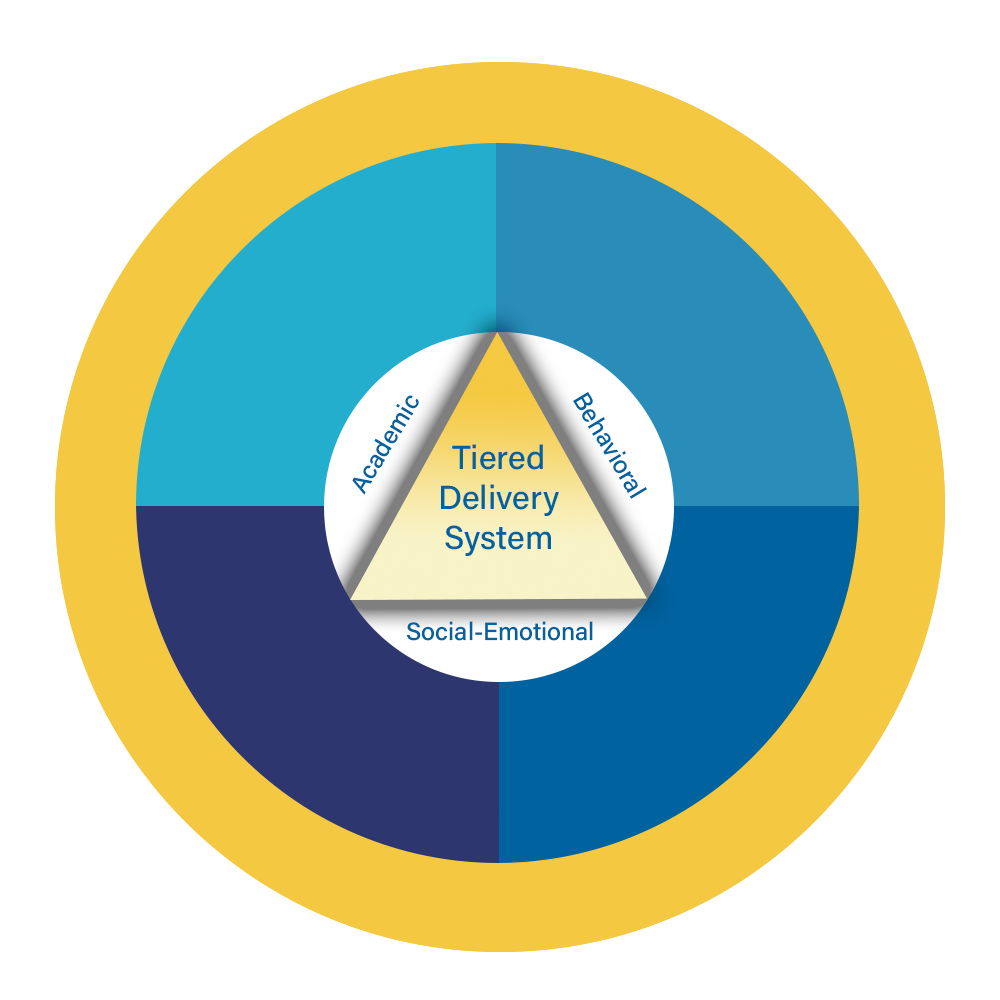
Each school year offers more than a new calendar; it brings opportunities to strengthen the system of supports and meet the needs of every student. A Multi-Tiered System of Supports (MTSS) helps build a preventative and proactive system where all students receive support across all tiers. Within a comprehensive MTSS framework, students receive high-quality, timely instruction and support. A strong Tier 1 builds a solid foundation to maximize student learning.
Schools administer valid and reliable universal screeners to identify students who may be at risk for not meeting benchmarks and to monitor the effectiveness of Tier 1 instruction. For students demonstrating a need for further support, diagnostic assessments and additional data points help MTSS teams make informed decisions about who may benefit from differentiated universal (Tier 1), targeted (Tier 2) or intensive (Tier 3) interventions.
MTSS teams analyze disaggregated data to ensure all students have access and opportunity within the tiered delivery system. A key benchmark is whether 80% or more of the students meet expectations with universal Tier 1 instruction. If not, the MTSS framework calls for strengthening Tier 1 instruction and guides next steps. Throughout the process, teams use collaborative problem-solving and data-based decision-making to ensure intentional instruction and support for all student groups.
For further information, KyMTSS.org provides resources to support teams with the Tiered Delivery System and Collaborative Problem-Solving Teams.
MTSS Team actions for consideration this month:
- Set meeting dates and establish a regular schedule for data review and decision-making for all levels of the MTSS teaming structure (district, school, grade-level/content, intervention teams).
- Review Tier 1 data from academic and behavioral universal screeners to identify trends and areas for improvement.
- Disaggregate data to ensure all groups are represented in MTSS planning.
- Explore the KyMTSS Intervention Inventory to assess current interventions and identify gaps or overlaps in the tiered delivery system.